The Chemistry of Cost: How India's Grip on Raw Drug Materials Determines What Americans Pay at the Pharmacy Counter
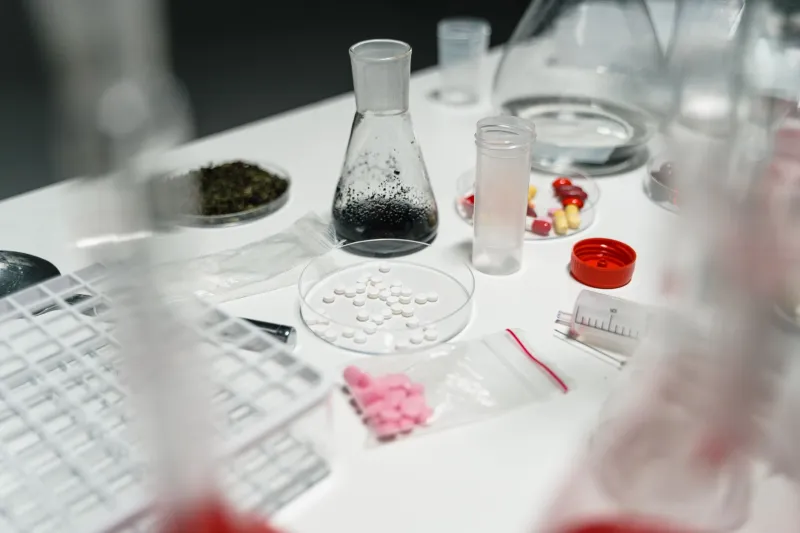
When an American patient hands over a co-pay at a Walgreens or CVS counter, the number printed on that prescription receipt reflects decisions made thousands of miles away — in industrial corridors stretching from Hyderabad to Ahmedabad, in fermentation tanks processing bulk chemical intermediates, and in regulatory dossiers filed with agencies the patient has never heard of. The active pharmaceutical ingredient, or API, is the biologically active compound that makes any drug actually work. And for a remarkable proportion of medications dispensed in the United States, that ingredient originates in India.
Understanding this relationship is not an academic exercise. It is, increasingly, a matter of economic and public health urgency.
India's Structural Position in the Global API Market
India currently accounts for approximately 20 percent of global generic drug exports by volume and supplies APIs for roughly 40 percent of the over-the-counter and prescription medications sold in the United States. Certain therapeutic categories show even higher dependency rates. Antibiotics, cardiovascular drugs, antiretrovirals, and several classes of diabetes medication all rely on Indian API production at rates that would be difficult to replace quickly under any realistic scenario.
This position was not accidental. Decades of deliberate industrial policy, a large pool of trained pharmaceutical chemists, comparatively lower production costs, and robust regulatory investment transformed India into the world's pharmacy — a title the country wears with justified pride. The pharmaceutical clusters around Hyderabad's Genome Valley, the chemical manufacturing zones of Gujarat, and the formulation hubs of Maharashtra represent genuine industrial achievement, not merely cost arbitrage.
Yet structural dominance of this kind carries implications that extend well beyond the exporting country's borders.
The Pricing Mechanism Nobody Talks About
American consumers and policymakers have spent considerable energy debating pharmacy benefit managers, insurance formularies, and brand-name drug list prices. These are legitimate concerns. But the conversation rarely descends far enough into the supply chain to examine how API pricing at the source affects the final number on a prescription bottle.
The economics work roughly as follows. A generic drug manufacturer — whether based in India, the United States, or Europe — purchases APIs from bulk producers, typically in India or China. API prices fluctuate based on raw material availability, energy costs, environmental compliance expenditures, and, critically, market concentration. When a single API is produced by only a handful of manufacturers globally, those manufacturers hold meaningful pricing power. When regulatory actions, plant shutdowns, or geopolitical disruptions reduce that number further, pricing power increases accordingly.
The US Food and Drug Administration's Drug Shortages Database has documented repeated instances in which API supply constraints preceded drug shortages and, in some cases, price increases in the US market. The connection is not always direct or immediate, but it is consistent enough to warrant serious attention from health economists and procurement specialists.
Geopolitical Vulnerability and the China Factor
India's own API supply chain contains a dependency that further complicates the picture. A significant share of the chemical intermediates and key starting materials used in Indian API production originates in China. Estimates vary, but industry analysts suggest that between 60 and 70 percent of India's pharmaceutical raw material imports come from Chinese suppliers for certain drug classes.
This layered dependency — the US relying on Indian finished APIs, and India relying on Chinese chemical precursors — creates a supply chain that is geographically concentrated at multiple points simultaneously. Trade tensions between Washington and Beijing, export restrictions imposed during the early months of the COVID-19 pandemic, and periodic environmental crackdowns on Chinese chemical manufacturing have all demonstrated how quickly disruptions at one node can propagate downstream to American patients.
The Indian government has recognized this vulnerability and launched production-linked incentive schemes specifically designed to reduce dependence on Chinese intermediates. Progress has been made, but the structural transition is measured in years, not quarters.
Nearshoring, Reshoring, and the Limits of Washington's Ambitions
In response to supply chain anxieties sharpened by the pandemic, American policymakers began advocating seriously for pharmaceutical nearshoring and domestic API production. Legislative proposals, executive orders, and federal procurement preferences have all attempted to incentivize US-based API manufacturing.
The ambition is understandable. The economics are considerably more challenging.
Building an API manufacturing facility in the United States costs multiples of what equivalent capacity costs in India, both in capital investment and in ongoing operational expenses. Environmental permitting timelines, labor costs, and the relative scarcity of experienced pharmaceutical chemical engineers create structural barriers that subsidies alone cannot easily overcome. Several companies have announced domestic API investments in response to federal encouragement, but industry analysts consistently note that meaningful displacement of Indian API supply would require sustained policy commitment over a decade or more — and even then, certain chemistry-intensive APIs would remain economically impractical to produce domestically at scale.
For Indian manufacturers, this reality is both a commercial opportunity and a geopolitical asset. The dependency is not easily unwound, and sophisticated Indian pharmaceutical companies understand that their position in the American supply chain carries a form of negotiating leverage that rarely requires explicit exercise.
What Drug Price Negotiations Actually Mean for Indian Manufacturers
The Inflation Reduction Act's provisions allowing Medicare to negotiate prices directly with pharmaceutical manufacturers generated considerable discussion about its impact on branded drug companies. Less examined is the downstream effect on Indian API and generic drug producers.
When Medicare negotiates a lower price for a branded drug approaching patent expiration, it affects the economic incentives for generic entry. If the negotiated brand price falls close to anticipated generic pricing, the financial reward for a generic manufacturer launching a competing product diminishes. Since Indian companies dominate the US generic drug market, accounting for roughly 30 percent of all generic prescriptions dispensed, any policy that reshapes the economics of generic competition has direct implications for Indian pharmaceutical exporters.
Some Indian industry observers have expressed concern that aggressive drug price negotiation frameworks, while benefiting American patients in the short term, could reduce the commercial incentives that have historically driven Indian generic manufacturers to challenge patents aggressively and bring lower-cost alternatives to market. The long-term pricing effects of reduced generic competition would ultimately be borne by American patients — a paradox that deserves more rigorous analysis than it typically receives in policy discussions.
A Dependency That Runs Both Ways
It would be a mistake to characterize the US-India pharmaceutical relationship as one of simple American vulnerability to Indian leverage. The dependency is genuinely bilateral. Indian pharmaceutical manufacturers have invested heavily in US FDA compliance infrastructure, in American distribution networks, and in the commercial relationships that make the US market their single most important export destination. A disruption to that commercial relationship would impose significant costs on the Indian industry as well.
What the API supply chain actually represents is a deeply interlocked economic relationship in which the interests of Indian manufacturers, American patients, and US healthcare payers are intertwined in ways that resist simple nationalist narratives. The challenge for policymakers on both sides is to manage the vulnerabilities of this interdependence without sacrificing the genuine efficiencies — and the genuine affordability benefits — that the relationship has historically delivered.
For American patients filling prescriptions today, the price they pay is, in a very real sense, a product of chemistry performed in Indian manufacturing plants operating under FDA oversight, governed by global commodity markets, and shaped by geopolitical forces that no pharmacy benefit manager has ever had to explain on a summary of benefits form. Understanding that upstream reality is the first step toward any policy response that takes drug affordability seriously.