Old Molecules, New Missions: Five Ways Indian Pharma Companies Are Repurposing Established Drugs to Address America's Most Pressing Health Challenges
The conventional drug development pathway—from molecular discovery to FDA approval—takes an average of 12 to 15 years and costs upward of $2.5 billion. For a healthcare system grappling with an opioid epidemic, a long COVID burden affecting millions, rising rates of treatment-resistant depression, and persistent gaps in affordable chronic disease management, that timeline is simply too slow.
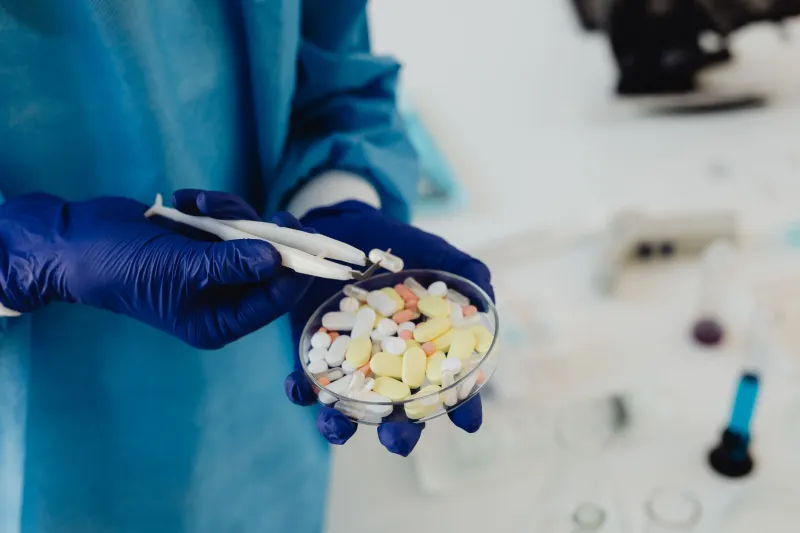
Drug repurposing offers a compelling alternative. By identifying new therapeutic applications for medications that have already cleared the safety hurdles of clinical development, researchers can compress the development timeline dramatically. A drug with an established human safety profile can move into Phase II efficacy trials for a new indication without repeating years of preclinical toxicology work. The savings in time and cost are substantial—and the potential benefit to patients is immediate.
Indian pharmaceutical companies, with their unparalleled familiarity with established drug molecules and their sophisticated understanding of the FDA regulatory framework, have become some of the most active and effective practitioners of repurposing science. The following five cases illustrate the breadth and ambition of this work.
1. Low-Dose Naltrexone for Chronic Pain and Autoimmune Conditions
Naltrexone was originally approved by the FDA in the 1980s as a treatment for opioid dependence and alcohol use disorder, at doses typically ranging from 50 to 100 milligrams. But research over the past two decades has suggested that at dramatically lower doses—1.5 to 4.5 milligrams—the drug may exert distinct anti-inflammatory effects through mechanisms that are not fully understood but appear to involve modulation of microglial activity in the central nervous system.
This low-dose naltrexone (LDN) phenomenon has attracted significant interest for its potential applications in fibromyalgia, multiple sclerosis, Crohn's disease, and other conditions characterized by central sensitization or immune dysregulation. The problem has historically been access: LDN is not commercially available in the United States at the relevant doses, requiring patients to rely on compounding pharmacies, with all the quality variability that entails.
Several Indian pharmaceutical manufacturers have identified this gap and are actively pursuing FDA approval for standardized low-dose naltrexone formulations. The regulatory pathway is relatively streamlined because the safety profile of naltrexone at higher doses is extensively documented. Indian firms are leveraging their formulation expertise—particularly in controlled-release and precise low-dose tablet manufacturing—to develop products that could bring consistency and quality assurance to a patient population currently navigating an informal treatment landscape.
2. Metformin's Expanding Role Beyond Type 2 Diabetes
Metformin has been a cornerstone of type 2 diabetes management for decades, and Indian manufacturers supply a substantial portion of the metformin consumed in the United States. But the drug's mechanism of action—principally through activation of AMP-activated protein kinase—has attracted intense scientific interest for applications far beyond glycemic control.
Research published in leading journals has suggested potential roles for metformin in cancer prevention, cognitive aging, polycystic ovary syndrome (PCOS), and even longevity. The landmark TAME (Targeting Aging with Metformin) trial, funded by the American Federation for Aging Research, is currently investigating whether metformin can delay the onset of age-related diseases in non-diabetic adults—a study that, if successful, would represent one of the most significant reframings of an existing drug in medical history.
Indian pharmaceutical companies are not passive observers of this research. Firms including Sun Pharmaceutical and Torrent Pharmaceuticals have invested in formulation development for extended-release metformin variants designed for non-diabetic indications, and several have engaged with the FDA on the regulatory pathways applicable to supplemental New Drug Applications for these new uses. The combination of deep manufacturing expertise and regulatory investment positions Indian firms to bring optimized metformin formulations to new patient populations efficiently.
3. Ivermectin Research and the COVID-19 Inflection Point
No drug repurposing story from the past five years has been more publicly debated than ivermectin's proposed role in COVID-19 treatment. The antiparasitic medication, used for decades against conditions including river blindness and strongyloidiasis, became the subject of intense scientific controversy during the pandemic, with some studies suggesting antiviral effects and others—including large randomized trials—finding no clinically significant benefit for COVID-19 outcomes.
The scientific debate itself is instructive about the repurposing process. Indian pharmaceutical companies, including those that manufacture the majority of the world's ivermectin supply, found themselves at the center of a global conversation about what constitutes sufficient evidence for repurposed drug use. The episode accelerated investment by Indian CROs and manufacturers in the kind of rigorous, placebo-controlled trial infrastructure needed to generate FDA-acceptable evidence for repurposed indications.
Regardless of ivermectin's ultimate role in COVID-19 management, the pandemic demonstrated that Indian pharmaceutical manufacturers have both the production capacity and the regulatory sophistication to respond rapidly when an existing drug emerges as a candidate for a new indication. That capacity will matter for the next pandemic, whenever it arrives.
4. Buprenorphine Formulation Innovation for the Opioid Crisis
The United States loses more than 80,000 people annually to drug overdose deaths, with opioids implicated in the majority of those fatalities. Buprenorphine, a partial opioid agonist approved for opioid use disorder treatment, is one of the most evidence-supported tools available to address this crisis—but access remains severely constrained by cost, stigma, and the logistical challenges of traditional sublingual formulations.
Indian pharmaceutical companies have recognized buprenorphine as a priority area for formulation innovation. The development of extended-release injectable and implantable buprenorphine formulations—which eliminate the daily dosing burden and associated diversion risks of sublingual products—has attracted significant attention from Indian manufacturers with expertise in depot injection and implant technologies.
Lupin Pharmaceuticals, which has a substantial US presence, has been among the Indian firms investing in novel buprenorphine delivery systems. Extended-release formulations can be transformative for patients with opioid use disorder, removing the daily ritual of medication-taking that can itself be a barrier to sustained recovery. Indian manufacturers' ability to produce these formulations at costs accessible to Medicaid and uninsured patients adds a crucial equity dimension to the innovation.
5. Fluvoxamine and the Search for Long COVID Treatments
Fluvoxamine, an SSRI approved for obsessive-compulsive disorder since 1994, emerged during the COVID-19 pandemic as one of the more intriguing repurposing candidates for early COVID-19 treatment and, subsequently, for the management of long COVID symptoms. Research from Washington University in St. Louis and other institutions suggested that fluvoxamine's sigma-1 receptor agonist activity—a pharmacological property distinct from its serotonergic effects—might reduce inflammatory responses associated with severe COVID-19 and post-acute sequelae.
For the estimated 16 million Americans experiencing long COVID symptoms, including cognitive impairment, fatigue, and dysautonomia, effective treatment options remain scarce. Fluvoxamine's established safety profile, its availability as a low-cost generic, and its mechanistic rationale for immune modulation have made it a focus of ongoing clinical investigation.
Indian manufacturers, as major producers of fluvoxamine for the US market, are positioned to support rapid scaling of supply if clinical evidence solidifies. Several Indian firms have also engaged with researchers investigating optimized dosing regimens and formulation modifications—including extended-release variants—that could improve tolerability for patients using the drug for long COVID indications.
The Strategic Advantage of Repurposing Expertise
Across these five cases, a common thread emerges: Indian pharmaceutical companies bring a distinctive combination of molecular familiarity, formulation capability, and regulatory fluency that makes them exceptionally well-suited to repurposing work. They know these molecules intimately—their chemistry, their manufacturing requirements, their stability profiles, and their regulatory histories. That knowledge base is not easily replicated, and it translates directly into faster, more cost-effective development programs for new indications.
For American patients waiting for solutions to conditions that have resisted conventional drug development, the repurposing capabilities of India's pharmaceutical sector represent a genuinely important resource—one that deserves far greater recognition than it typically receives.