Catching Flaws Before They Catch Patients: The Self-Policing Culture Inside India's Elite Drug Facilities
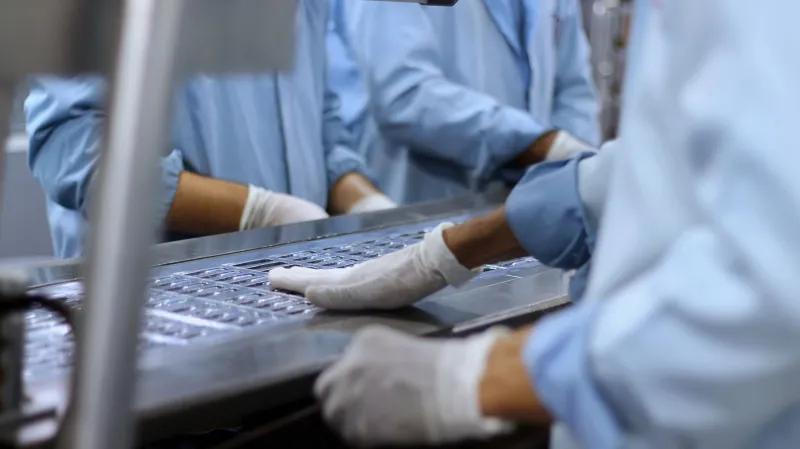
For most Americans filling a prescription at their local pharmacy, the question of how that tablet was made — and how many layers of scrutiny it passed through before reaching the bottle — rarely surfaces. The FDA's inspection mandate provides a visible framework of assurance, but a growing body of evidence suggests that the most consequential quality controls at many Indian manufacturing facilities are the ones regulators never observe firsthand.
At a handful of tier-one Indian pharmaceutical plants supplying the US market, internal quality audit programs have evolved into something qualitatively different from the compliance exercises they once resembled. They are, by many accounts, more demanding than the inspections they prepare for.
The Audit That Never Ends
At a large-scale facility in Hyderabad that manufactures solid oral dosage forms for several major US generic labels, the quality assurance calendar does not have an off-season. According to the facility's Vice President of Quality Operations, who agreed to speak on background, the plant conducts what he describes as a "rolling audit architecture" — a system in which different production lines, laboratory functions, and documentation workflows are subjected to intensive internal review on a staggered monthly schedule.
"We do not wait for a regulatory visit to find a problem," he explained. "By the time an external inspector arrives, we have already reviewed that area at least twice in the preceding twelve months. If there is a deviation, we want to own the discovery."
This philosophy — owning the discovery — has become something of a governing principle at facilities that supply the US market at scale. The competitive logic is straightforward: a single FDA warning letter or import alert can suspend shipments worth tens of millions of dollars annually and permanently damage relationships with US distribution partners. The financial calculus makes rigorous self-policing not merely a regulatory obligation but a business survival strategy.
Beyond the Checklist: What Internal Audits Actually Examine
The gap between what a standard FDA inspection covers and what a sophisticated internal audit program scrutinizes is, according to quality professionals at these facilities, meaningful and deliberate.
FDA inspections, while thorough, are constrained by time. A team of investigators typically spends between three and ten days at a facility, focusing on current Good Manufacturing Practice compliance, data integrity, and specific product lines flagged for review. Internal audit teams at leading Indian facilities, by contrast, operate with institutional memory, longitudinal data, and the authority to pursue anomalies across systems that an external inspector may never connect.
At one Gujarat-based facility that supplies APIs to several US hospital pharmacy networks, the internal quality team maintains what they call a "deviation genealogy" database — a proprietary system that tracks not just individual deviations but their recurrence patterns, root cause classifications, and corrective action outcomes over multi-year timelines. When a new deviation is logged, the system automatically queries historical analogs to determine whether a systemic failure mode might be re-emerging.
"An FDA inspector sees a snapshot," noted a quality director at the facility. "Our internal system sees a film. We can identify a pattern that is developing before it becomes a visible problem."
The Cultural Engine Behind the Rigor
Understanding why Indian pharmaceutical manufacturers have developed these capabilities requires looking beyond regulatory pressure to the broader competitive and cultural environment in which these companies operate.
India's domestic pharmaceutical market is intensely competitive, with dozens of manufacturers vying for a limited pool of US supply contracts. The FDA's Establishment Inspection Report process, combined with the public visibility of warning letters and import alerts, has created a transparency environment in which quality failures are commercially catastrophic. Companies that have invested in proactive quality infrastructure have, over time, demonstrated measurably lower rates of US recalls and regulatory actions — a track record that translates directly into contract renewals and preferred supplier status with American distributors.
There is also a generational shift underway in the leadership of these quality functions. A new cohort of quality executives at major Indian facilities have been trained in Six Sigma methodologies, pharmaceutical engineering programs with US accreditation partnerships, and increasingly, in cross-functional quality management frameworks developed in collaboration with US pharmaceutical companies that have established joint ventures or technical partnerships in India.
"The quality leaders at our peer companies today are not thinking about passing inspections," observed a senior quality consultant who has worked with multiple Indian exporters. "They are thinking about manufacturing systems that do not produce failures. That is a fundamentally different mindset."
Contamination Prevention: Where Internal Audits Have Mattered Most
The practical impact of this internal audit culture is perhaps most visible in contamination prevention — an area where the consequences of failure for US patients can be severe and where the FDA's post-market surveillance system, however effective, is inherently reactive.
Several quality executives interviewed for this article described instances in which internal audit findings had identified contamination risk vectors — including cross-contamination between adjacent production lines, HVAC system pressure differentials outside validated ranges, and water system bioburden trends — before any finished product was affected. In each case, the corrective action was implemented and documented internally, with no regulatory notification required because the issue had not yet reached a threshold that would trigger mandatory reporting.
This is, by design, how preventative quality systems are supposed to function. But it requires an organizational commitment to surfacing uncomfortable findings rather than managing them quietly — a commitment that, according to quality professionals, is not universal across the industry but is increasingly characteristic of the facilities that have sustained long-term US market access.
What This Means for American Patients and Prescribers
For US healthcare providers and patients, the existence of these layered internal quality systems offers a form of assurance that the regulatory framework alone cannot fully provide. FDA approval and ongoing inspection remain the foundational standard, but the manufacturers who have built quality cultures that exceed those standards represent a meaningful tier of additional protection.
For physicians managing patients on chronic medications, for hospital pharmacists sourcing critical injectables, and for payers negotiating formulary contracts, the depth of a manufacturer's internal quality infrastructure is an increasingly relevant variable — one that is beginning to appear in supplier qualification criteria used by sophisticated US healthcare purchasers.
The invisible hand of internal quality assurance at India's leading pharmaceutical facilities is, in this sense, not invisible at all to those who know where to look. It is written in recall rates, warning letter histories, and the quiet, uninterrupted flow of safe medication reaching American patients every day.
PharmIndia Online covers the intersection of Indian pharmaceutical manufacturing and US healthcare access. This article is part of our ongoing series on quality systems and regulatory compliance in Indian drug manufacturing.